Friday, May 9, 2014

11-1


Mussolini: Benito Mussolini (1883-1945) was the fascist prime minister of Italy, with dictatorial powers, from 1922 until he was overthrown in 1943.
 
Fascism: extreme nationalism

Blackshirts: killed the people who opposed Mussolini (worked for him)

Lenin: founder of the Russian Communist Party, leader of the Bolshevik Revolution and architect and first head of the Soviet state.
 
USSR: The Union of Soviet Socialist Republics abbreviated to USSR or the Soviet Union, was a socialist state on the Eurasian continent.
 
Stalin: Joseph Stalin or Iosif Vissarionovich Stalin, was the leader of the Soviet Union from the mid-1920s until his death in 1953.
 
Hitler: Adolf Hitler was an Austrian-born German politician and the leader of the Nazi Party. He was chancellor of Germany from 1933 to 1945 and dictator of Nazi Germany from 1934 to 1945.
 
Mien Kamf: book written by Hitler while he was in jail (explained all of his plans)

Reichstag fire: On February 27, 1933, the German parliament building burned down due to arson. The government falsely portrayed the fire as part of a Communist effort to overthrow the state. 
 
Fuhrer: Führer, or Fuehrer is a German title meaning leader or guide now most associated with Adolf Hitler.
 
Manchuria: Manchuria is a historical name given to a large geographic region in Northeast Asia.
 
Neutrality Act: America decided to stay out of the war by not selling weapons to  any fighting countries.
 
Francisco Franco: Francisco Franco Bahamonde was the dictator of Spain from 1939 to his death in 1975.
 
Isolationism: America wanted to stay isolated so no war would erupt.

Internationalism
: loving your country.

Monday, April 14, 2014

WW2: Dorothea Lange

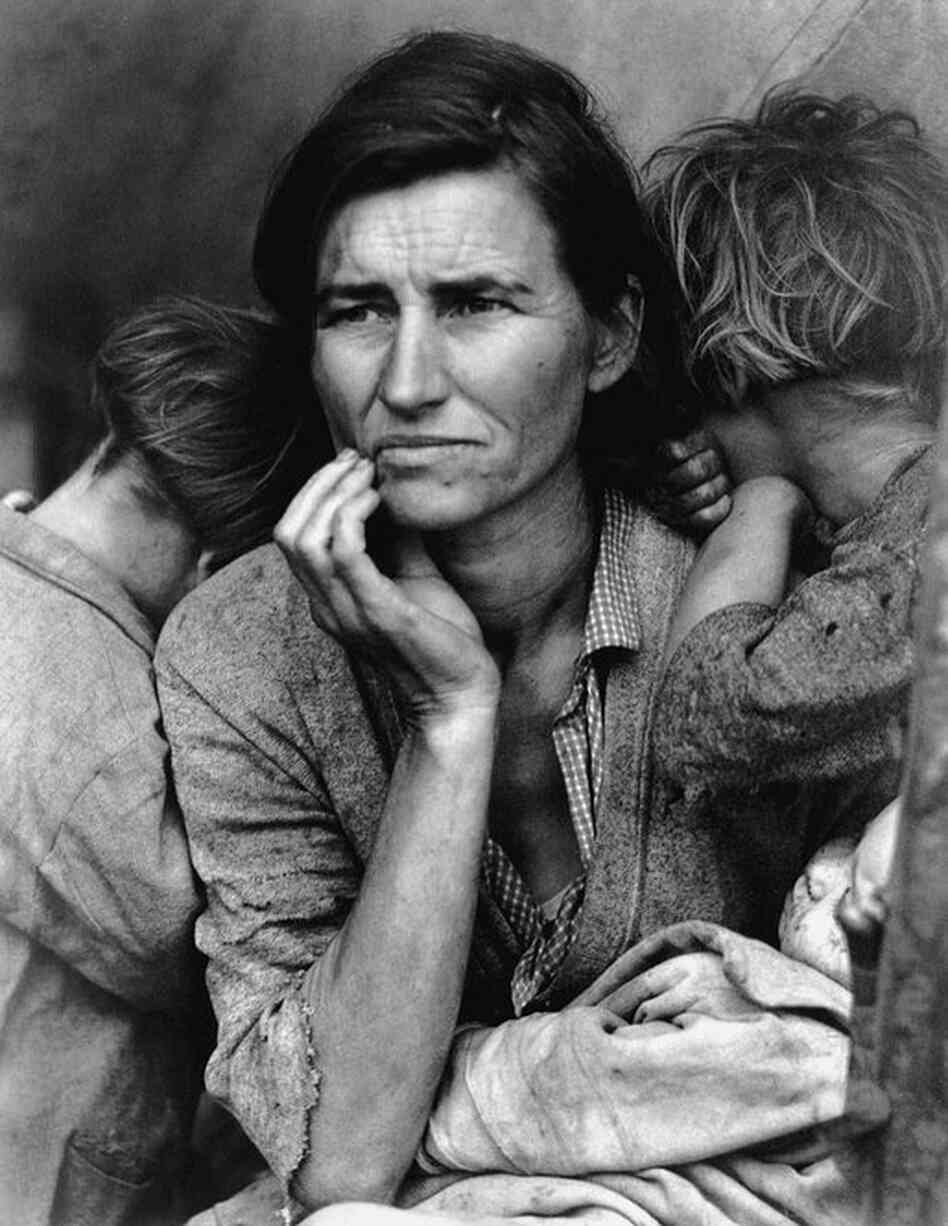
   Dorothea Lange was known for her famous photographs of the change in the home front during the war. She studied photography at Columbia university and worked in New york until 1918 when she began traveling. she was one of the well known and pioneering documentary photographers of the 20th century. She was born on May 26, 1895, in Hoboken, New Jersey. Heinrich Nutzhorn (her father) was a lawyer, and her mother named Johanna, was a stay at home mom who watched over her and her brother. At the young age of 7, Dorothea was diagnosed with polio, which left her right leg and foot weak.
    I
n 1920, she got her first real taste of documentary photography when she traveled around the Southwest,  mostly photographing Native Americans. Then during the Great Depression she documented labor strikes as well as endless waiting for the economy to turn around. In 1935, Lange was deployed to Texas and the Dakotas to record the happenings of the dust bowl and the migration that it brought with it. The dust bowl was a huge drought that swept through the southern states in the 1930's. It caused the migration of farmers to California when their jobs were blown away by the dust.  In 1940, she received the Guggenheim Fellowship award. In her line of work,  Lange experienced the beauty of her well-known portrait, “Migrant Mother,” which was an iconic image that gently and  captured the hardship and pain of what so many Americans farmers/migrants were facing.To this day the portrait now hangs in the hall of congress.
   When America entered into World War II, Lange was hired by the OWI to photograph the Japanese Americans. In 1945, she was employed also by the OWI, this time to document the San Francisco conference that created the United Nations. All this while battling health problems, she was still able to co-founded Aperture, a small publishing house that makes a periodical and high-end photography books.

 SOURCES:

http://www.americanswhotellthetruth.org/portraits/dorothea-lange

http://www.biography.com/people/dorothea-lange-9372993#final-years&awesm=~oDNHKlX8aRsS1s

PICTURES:

http://media.bonnint.net/oss/mormontimes/0/46/4681.jpg

 http://media.npr.org/assets/img/2010/04/28/lange1_custom_custom-476731ac7043e64e47c7d30efedbe45fff0c566e-s6-c30.jpg

Monday, March 17, 2014

Depression Outline


 intro: The great depression effected all of American citizens; stock market crashing and the dollars value slowly depleting were the main causes of the economies downfall. Americans lost their jobs and were forced onto the streets to attempt to feed their children.

1. The causes of the great depression were that the stock market crashed, banks closed so people couldn't get their money, and tons of people lost their land.

2. over speculation- People began to speculate that the depression was caused by specific people and started to throw people under the bus.
3. Govt Policy- A plan or course of action, as of a government, political party, or business, intended to influence and determine decisions, actions, and other matters. It was important because government played a big part in trying to help with the depression.

4. Unstable Econ- refers to a lack of usual fluctuations in the national, regional, and global economies. An economy with a lot of large recessions, very high inflation, or frequent financial crisis would be considered economically unstable.

5. uneven prosperity- There were no successful, or thriving conditions, especially in the financial respects.
6. overproduction- Factories began producing products by the dozens but went to waste when nobody could buy them (broke)
7. worker issues / farm issues- Farmers produced millions of crops during the great depression in order to pay their debts, but the prices soured and they lost their farms.
III Effects
1. Poverty- During the depression people were losing money and living on almost nothing. it all stayed like this even after the depression started to end.

2. Society- an organized group of persons associated together for religious, benevolent, cultural, scientific, political, patriotic, or other purposes. society, during the Great Depression, was becoming increasingly fragile and people really needed help.
 
3. World- from 1939 to 1945, the "whole world" was at war. the depression soon ended after America entered the battle.
 
IV Solutions
1. Hoover- While Hoover was president, the great depression became worse and worse but he did all he could to get people to volunteer and raise money.

2. Volunteerism- President Hoovers plan to end the great depression or at least make it better by having people volunteer to help raise money.
  
3. Public Works- the government helped by building new houses and buildings to fit the needs of all the people struggling.
4. Hawley Smoot- made a tariff that raised the tax even higher than it was. It caused frustration and made it even harder on the poor people.

5. RFC- a government agency that gave $2 billion in aid to state and local governments and made loans to banks, railroads, mortgage associations, and other businesses.
6. Roosevelt- became president and was determined to end the great depression better than Hoover.

7. new deal- gave the Americans agricultural adjustment act, which gave money to farmers to continue their production; the public works administration, which constructed roads, dams, and public buildings; the federal deposit insurance corporation, which served to make sure of deposits in banks.(made by Roosevelt)
8. alphabet soup- Roosevelt's New Deal programs have been referred to as alphabet soup. 
            example:(AAA)Agricultural Adjustment Administration
            example:(CCC)Civilian Conservation Corps
            example:(NYA)National Youth Administration
            example:(FSA)Farm Security Administration
9. Criticsim- Some people liked the idea of the new deal and others didn't.

10. 2nd new deal- the legislation that Roosevelt and Congress passed between 1935 and 1938— The Second New Deal legislation relied more heavily on the Keynesian style of deficit spending than the First New Deal did. Roosevelt altered his policy because of criticism.

11. Political Criticism (ex. Came from both the conservatives and liberals)

12. Conservatives- claimed his policies were socialism in disguise.

13. Liberals (ex: criticised the new deal also.)
Ex: thought he wasn't providing enough releif.
ex: thought he didn't maintain the fundamental aspects of capitalism.
VI Effectiveness
1. Changes in US- The government took on a greater role in the everyday social and economic lives of the people.
2. Unions- people began to speak up for what they believed in.

3. Culture- changed and many people began to think differently.

conclusion: the great depression changed the lives of every American and even people outside the country. citizens suffered from malnutrition, cold conditions and extreme poverty while going through this dark stage in the history of the united states.

Thursday, February 27, 2014

1920's beloved horse, Seabiscuit


     Breaking news! One name has swept the nation. George Woolf, a Canadian horse racer made history when he and his horse Seabiscuit won and beat the track record at Pimlico, Maryland. Woolf began racing thoroughbreds professionally in 1928, riding 150-200 races each year after that. When Woolf finally was considered Americas leading jockey, he was diagnosed with type 1 diabetes and thought his career was over but was able to overcome that obstacle and push on to win ninety-seven major stakes races. Considered the underdog of all the races, Seabuscuit was a small stature horse that nobody thought would win but amazingly was quick on his feet. The Thoroughbred race horse brought hope to the Americans when there seemed to be no hope. Seabiscuit showed Americans that even the small and wrongly judged can make history and even bring confidence that things will get better. Rode by a rider who didn't push him on to be his best, Seabiscuit  was put away until George Woolf found him. A frisky horse he was. Was only nice to those certain people who he had grown fond of. But there was something special about these two's relationship. When they ran they were not two but one with each other. George Woolf truly found his perfect match, and together they made history.

Friday, February 7, 2014

First Winter Olympics

      
        Right at this very moment, the 2014 Winter Olympics are going on and people are preparing to work their bodies to the extremes, in order to win the gold medal. The Olympics are a special event that occurs every 4 years and allows extraordinary people to show off their skills around the world and compete to brake world records. The sports shown in the special games include; figure skating, snowboarding, and freestyle skiing, along with many others that are familiar and some that aren't very common, like curling. Not only do the Olympics happen in the winter, there are also games in the summer.
     

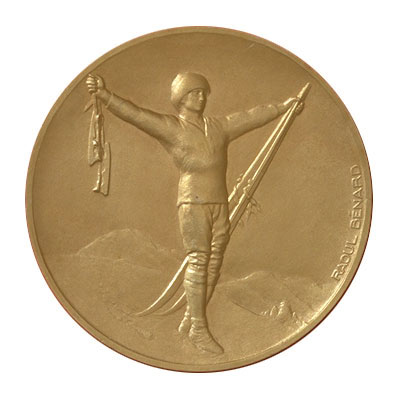
         Early in 1921 the International Olympic Committee announced that a winter sports week would be held to allow people around the world to compete against one another.  In 1924, the first winter Olympic games were held in Chamonix, France and attracted an astonishing 10,004 paying viewers. American Charles Jewtraw was one of the first people to obtain a medal in the 500m speed skate. Although in the case of the first winter Olympics, medals were not given until the ceremony that was held at a later date than the actual games. One tradition that hasn't stuck with us requires the people in the games to wear all of their gear during the opening ceremony when the torch is lit and a speech is given. Now, the members don't have to wear all that gear but still need to show which specific country they are from(what team they are on). I suppose the most famous part of all is when the winners claim their medal that they have trained so hard for. The medals were really a work in progress when they finally found what they would do with them. A skier holding their gear with the alpine mountains in the background. Many copies were made in the amazing town of Paris where the metal for the pendants were best made. The games are a big deal to others and nationally astonishing, so go home tonight and turn on the 2014 Winter Olympics that have been a tradition for so
many years.

 sources: 
http://www.olympic.org/chamonix-1924-winter-olympics

www.socialstudiesforkids.com/graphics/olympics_medal_1924_winter.jpg

http://i.imwx.com/web/multimedia/images/miscellaneous/olympics130_320x180.jpg
        

Friday, January 17, 2014

World War 1 Letter


Dear mom
    
           I miss you so much. The war is nothing like what I thought it would be and the amount of killed soldiers are uncountable. I happened to make a friend in the bunks a couple days ago; his name was William and he was from Virginia. I'm not sure if you saw that i put "was"... He died today, out of nowhere from this horrible sickness spreading around the camps. Many men are continuously dying from this small but deadly ailment. There are no symptoms though which is the scariest part about this sickness. People are walking around with no idea if they will fall ill or stay healthy enough to fight. It seems to be spreading through the air but other times it seems like its the germs on our filthy hands. Please pray for me mom I really need at least some hope.
        The weather sucks these days. Its rainy, cold and most of the times our tents flood and we end up sleeping on hard wet ground. We have set bed times by the commander which aren't very helpful because if he really thinks we can sleep after all the bloodshed, then he's straight up crazy. We aren't treated very nicely here either. Our food tastes of mold and mouse droppings (perhaps that's where the disease is coming from). The commanding officer pushes us for hours during our training and a bunch of men collapse in agony and exhaustion. Cuts and broken bones are taken care of in a horrid manner. A couple days ago I saw one of the runners come in with a mild fracture in his tibia and I guess they thought the only way to make it better was to completely saw off his leg with a rusty old saw while he lost a great amount of blood.
      I guess not all is bad though. We sit around the fire sometimes and share stories about our families and childhood experiences. I meet new people everyday and learn about new cultures I never  knew even existed. The people here push each other along and bring hope to the minds of everyone around us. I know I'm strong enough to make it through this. I will make you proud and I will come home to our family safe and sound.

Wednesday, January 8, 2014

Red Baron

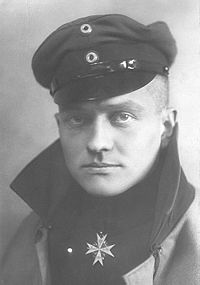
       A man by the name Baron Manfred von Richthofen, became a legend in the air during World War 1. He was known for flying a bright red airplane into battle, shooting down plane after plane and because of all of his 80 victories he was named the amazing "Red Baron." Manfred was the 2nd child of his father, Major Albrecht Freiherr von Richthofen, who had many more children to come. As a young boy, he was raised in a small town villa in the town Schweidnitz. He didnt follow in his fathers footsteps like Albrecht wanted, but instead joined the Wahlstatt cadet school in Berlin Germany. At the school he excelled in gymnastics and athletics, then went on to graduating and joined the cavalry.
       He became commissioned as a
lutenant  in Poland when World War 1 began in the summer of 1914. In May 1915, Richthofen decided to travel to Cologne to observe the training program at the No. 7 Air Replacement Station because he became increasingly interested in planes. He was taught how to do many things such as read a map, drop bombs, locate enemy troops, and draw pictures while still in the air. After a while of just observation and regular flying, Manfred was told to report to the "Mail Pigeon Detachment" which was a undercover scheme to bomb England. He went on his first real flight on September 1, 1915, but failed to bring down the enemy aircraft. He tried again and was eventually successful but what he did didn't qualify because kills on enemy lines didn't count. He continued his training and eventually passed all three exams and on December 25, 1915, was awarded his pilot's certificate.
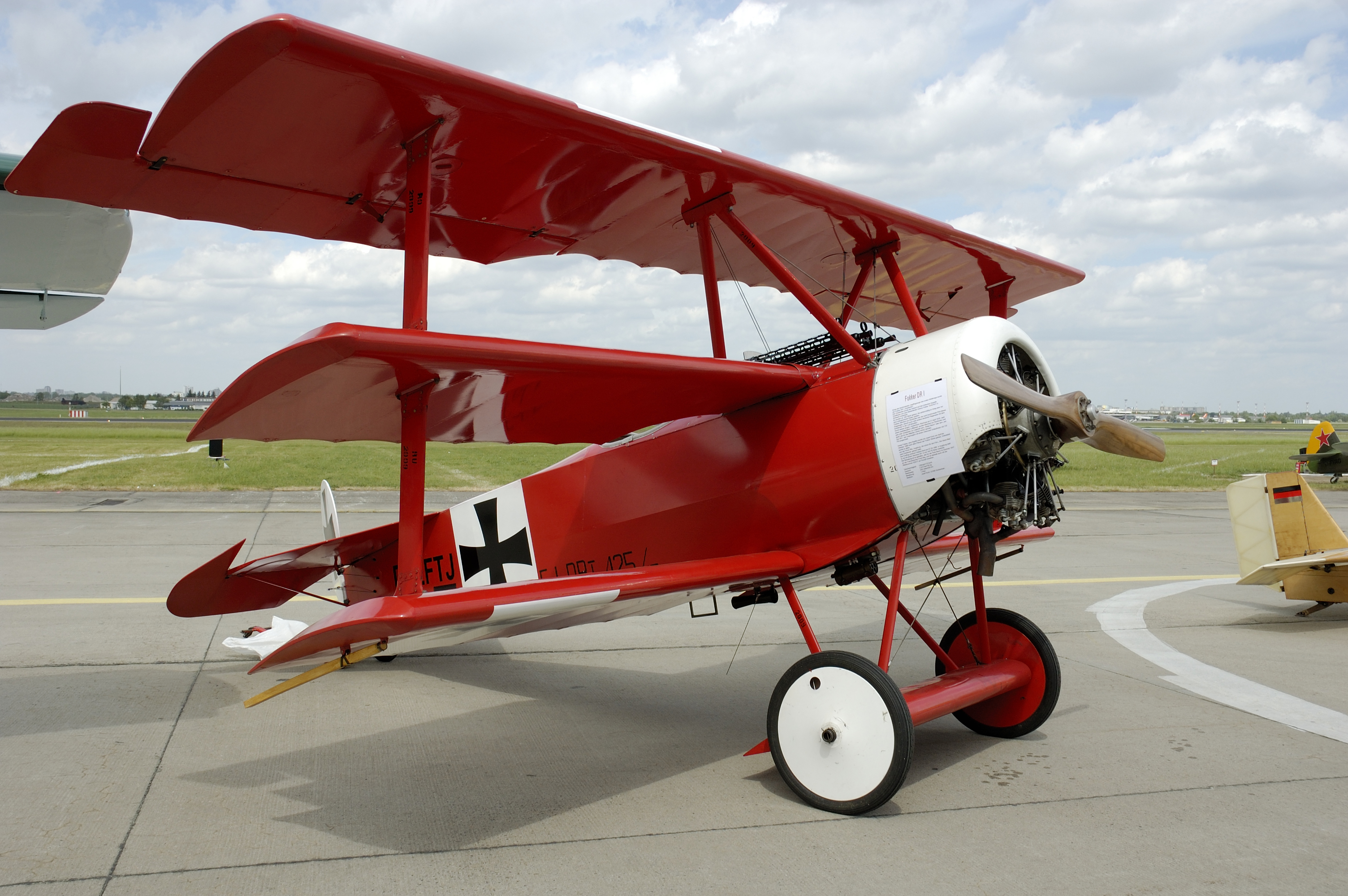
     On September 17, Richthofen got his first chance to fly in combat. He shot down planes and was finally credited for his victories. He decided to do something very special for each kill he got; he would land near the wreckage and take the serial number off the airplane to be sent back home and hung in his room. People began to notice, but not as much as he wanted so in turn he painted the nose of his airplane a bright red color. By painting his airplane red, it caused fear and respect from others around him. Enemies began calling him "The Red Battle Flier." Baron shot down so many planes that he broke the record for 52 kills and became the hero and legend of pilots during World War 1, until he was shot in the chest and instantly died( only 25 years old)

Citation:  Rosenberg, Jennifer. "Red Baron." About.com . N.P, n.d. Web. 9 Jan. 2014. <http://history1900s.about.com/od/1910s/a/redbaron.htm>.