Friday, June 6, 2014

13-2

What is the goal of containment? Keeping communism within the present territory through the use of diplomatic, economic, and military actions.

How is GREECE the first battlefront in the cold war? The United States supported turkey, but Britain tried to help Greece. On august 1946, Greek communists launched a guerrilla attack against the Greek government.(strained Britain's economy because it was already suffering from the war)

What is the Marshall plan? Secretary of State George C. Marshall made the European recovery plan or "Marshall plan, which would give Europeans nations American aid to rebuild their economy.
What is the Berlin Airlift? There was a blockage made by Stalin to prevent help to Berlin, but Stalin raised it and Americans could once again bring food, medicine and coal to all the citizens.

What is NATO? Both the public and congress began to support a military alliance with Western Europe and in 1949 created the North Atlantic Treaty Organization (NATO)- a mutual defense alliance.(America, Canada, Britain, France, Italy, Belgium, Luxembourg, Portugal, Netherlands, Norway, Denmark, and Iceland)

What happened in China? A civil war broke out in china between Korea and China that forced American to get involved so that a communist revolution in Asia wouldn't happen. Victorious communist established the "people's republic of china"(1949)

Make a 5 step timeline in Korean War.
1. (June 25, 1950) North Korean troops invaded into the south, rapidly driving back the poorly equipped South Korean forces.
2. (September 15, 1950) MacArthur ordered a darling invasion behind enemy lines at the port of Inchon.
3. (April 1951) turfmen fired MacArthur for insubordination.
4. (November 1951) peace negotiations began.
5. (1953) armistice was signed.

Wednesday, June 4, 2014

Civil Rights Terms

741- NAACP: national association for advancement of colored people. Supported anti-segregation court cases.

742 Sit in
: a sit in is when you go to a restraunt you are segregated from and sit down refusing to leave until restraunt owners are so ashamed that they integrate it.

742 Brown v. Board of Education
: was a break through in segregated schools. They said that segregation in schools violated the 14th amendment.

744 Montgomery Bus Boycot
: Martin Luther king jr. Gets everyone to ire the bus. Eventually buses are going so broke that they have to desegregate them.

744 MLK Jr.
:  united the African Americans and led them to peaceful protests.

749 Sit in
: sit in they had the NAACP  sponsor a group of kids to go into cracka schools and sit down until they were desegregated.

750 Freedom Riders:wanted non segregated bus station turminals.

754 I have a dream
: Martin Luther's speech that empelled African Americans to revolt.

755  Civil Rights Act of 1964
: gave the federal government broad power to prevent racial discrimination in a number of areas. Made segregation illegal  and gave colored people equal access to such facilities as restraunts, parks, libraries and theaters. Forced school desegregation and told job owners to no descriminate. Helped establish the EEOC which banned discrimination by race, religion, gender, and national origin.

756 Voting rights act of 1965
: authorized the attorney general to send federal examiners to register qualified voters, bypassing local officials who often refused to register African Americans. Black people could now vote.

761 Malcolm X
:(1960's) a man who became a symbol of he black power movement that was sweeping the nation.

762 Black Panthers
: a  group of black leadership hat wanted to empower the black revolution to give rights by giving people guns/arms.

Thursday, May 22, 2014

First Organ Transplant(1950)

    In the 21st century, organ transplants are an everyday procedure to help save the lives of hundreds of thousands. Livers, hearts, kidneys and lungs are just a few of the organs shipped across the USA and delivered to patients in need. It wasn't always this way though, before 1950 many people would suffer and die from organ failure. Technology was not advanced enough to successfully perform the simplest and the most common procedures although successful transplants of bones, skin, nerves, tendons and eye corneas had been accomplished.
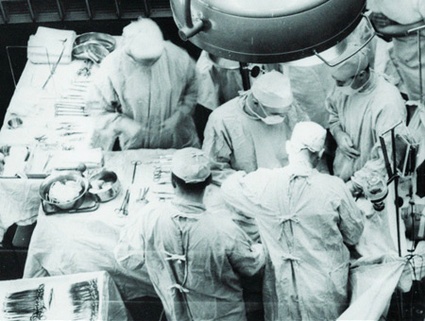
    The first person to ever have a transplant done was a 49 year old girl by the name of Ruth Tucker. Ruth suffered from polycystic kidneys(inherited by her mother) and was in dire need of a new one. On June 17, 1950 at Little Company of Mary Hospital, history was made when surgeons performed the first vital organ transplant on Ruth. People gathered around to watch as one of the most important steps in human medical/technical history unfolded. while filming, one pf the camera crew who was supposed to be recording fainted as he wasn't used to being exposed to such a gruesome environment.
    Today technology has advanced greatly and cloning is even a possibility in USA. There are certified brain surgeons and people are now opening chests to perform heart surgery and even replacing parts of tissue that no longer work. With our advancement in medical techniques and the possibility of cloning, what could come next in the near future?

sources

  • http://lcmhealthnews.org/first-successful-organ-transplant-little-company-of-mary-1950/


Tuesday, May 13, 2014

13-1

What was the goal for Roosevelt after the war?  What were Soviet goals about Germany? The soviets wanted to keep Germany weak and make sure that the countries between Germany and and the Soviet Union were under soviet control. President Roosevelt  hoped that the victory over axis and the United Nations would lead to a more peaceful world.

What did FDR think was 'key' to world peace?
Franklin Roosevelt believed the key to world peace was to create economic growth and wanted to increase world trade.

What was 'declaration of liberated europe, and how successful was it?' It asserted "the right of all people to choose the form of government under which they live." It led to conflict and eventually just was looked over.

How was Germany to be controlled? The conference agreed to divide Germany into four zones: United States, Soviet Union, France, and Great Britain. They also would divide the city of Berlin.

What was Truman's view about how to deal with USSR?

He believed that we should fight back and not make the same mistake Britain did with hitler.

What is a satellite nation? The communist countries of Eastern Europe. They had to remain friendly to the Soviet Union even though they were not under their control AND remain communist.

What is an 'iron curtain'? Was the seperation of communist nations  of Eastern Europe from the west.

Friday, May 9, 2014

12-2


Nimitz- commander of the navy in the pacific (purl harbor)

MacArthur- the commander of the forces in the Phillipines. (Dug out dug=hung out at base while his soldiers fought)

Bataan- fighting for the Phillipines and 70 or more soldiers captured (battle)

Doolittle raid- when 16 planes were unloaded and brought over Tokyo where they dropped bombs. (Returned to China after bombing) only 8 died out of like 60 and some captured.

Coral sea- (battle) Japanese wanted to take over the Portuguese but America broke the code and stopped them (met and attacked them)

Midway- after purl harbor. America knew they were coming so we attacked them.

Erwin Rommel- desert fox!

Kassarine pass-British vs. German.

Patton- general, brilliant strategist and gets America ready for war.

Casa Blanca- meeting between FDR and Churchill. Want to invade the beaches in France and attack Italy.

Convoy system- cargo ships traveled as a group to protect itself from submarines.

11-1


Mussolini: Benito Mussolini (1883-1945) was the fascist prime minister of Italy, with dictatorial powers, from 1922 until he was overthrown in 1943.
 
Fascism: extreme nationalism

Blackshirts: killed the people who opposed Mussolini (worked for him)

Lenin: founder of the Russian Communist Party, leader of the Bolshevik Revolution and architect and first head of the Soviet state.
 
USSR: The Union of Soviet Socialist Republics abbreviated to USSR or the Soviet Union, was a socialist state on the Eurasian continent.
 
Stalin: Joseph Stalin or Iosif Vissarionovich Stalin, was the leader of the Soviet Union from the mid-1920s until his death in 1953.
 
Hitler: Adolf Hitler was an Austrian-born German politician and the leader of the Nazi Party. He was chancellor of Germany from 1933 to 1945 and dictator of Nazi Germany from 1934 to 1945.
 
Mien Kamf: book written by Hitler while he was in jail (explained all of his plans)

Reichstag fire: On February 27, 1933, the German parliament building burned down due to arson. The government falsely portrayed the fire as part of a Communist effort to overthrow the state. 
 
Fuhrer: Führer, or Fuehrer is a German title meaning leader or guide now most associated with Adolf Hitler.
 
Manchuria: Manchuria is a historical name given to a large geographic region in Northeast Asia.
 
Neutrality Act: America decided to stay out of the war by not selling weapons to  any fighting countries.
 
Francisco Franco: Francisco Franco Bahamonde was the dictator of Spain from 1939 to his death in 1975.
 
Isolationism: America wanted to stay isolated so no war would erupt.

Internationalism
: loving your country.

Monday, April 14, 2014

WW2: Dorothea Lange

   Dorothea Lange was known for her famous photographs of the change in the home front during the war. She studied photography at Columbia university and worked in New york until 1918 when she began traveling. she was one of the well known and pioneering documentary photographers of the 20th century. She was born on May 26, 1895, in Hoboken, New Jersey. Heinrich Nutzhorn (her father) was a lawyer, and her mother named Johanna, was a stay at home mom who watched over her and her brother. At the young age of 7, Dorothea was diagnosed with polio, which left her right leg and foot weak.
    I
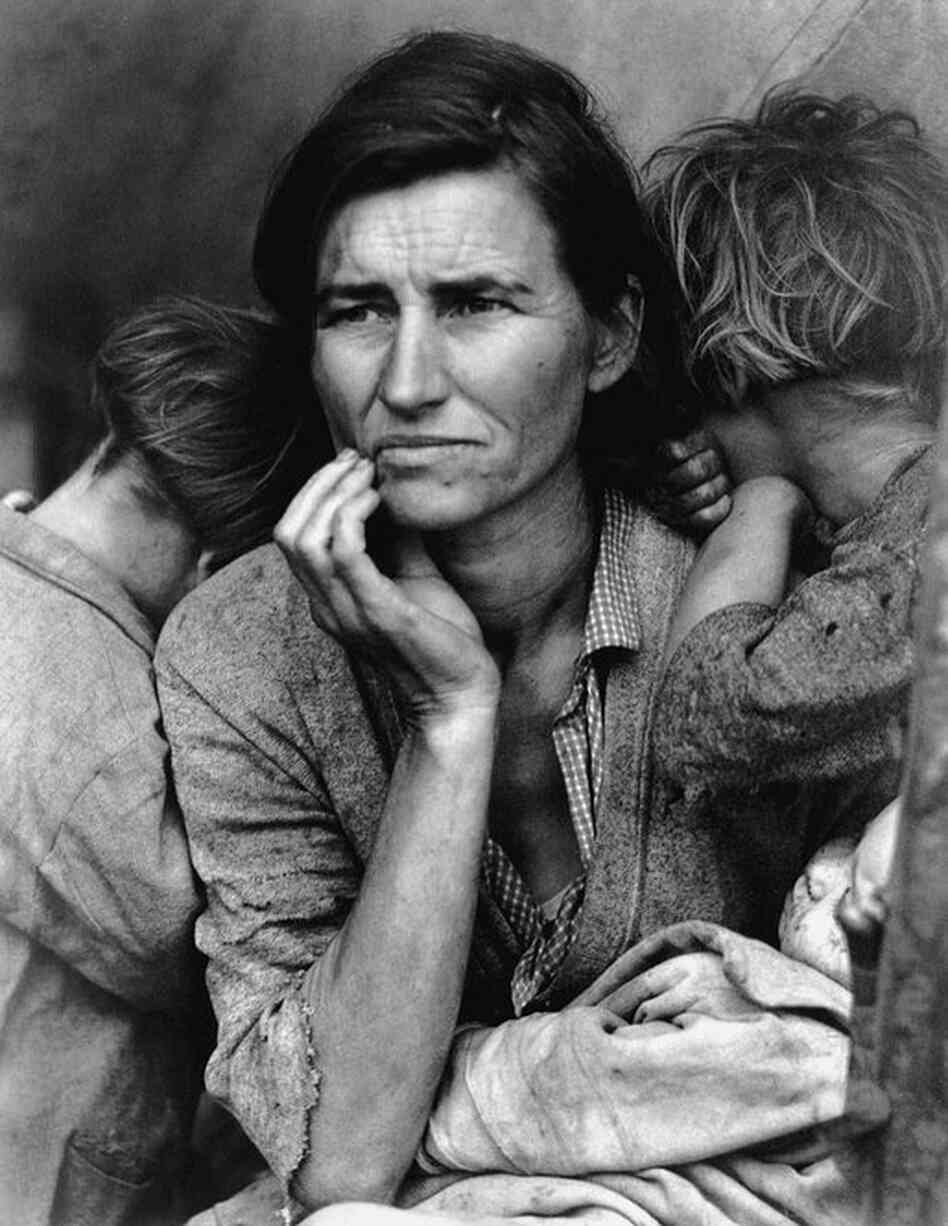
n 1920, she got her first real taste of documentary photography when she traveled around the Southwest,  mostly photographing Native Americans. Then during the Great Depression she documented labor strikes as well as endless waiting for the economy to turn around. In 1935, Lange was deployed to Texas and the Dakotas to record the happenings of the dust bowl and the migration that it brought with it. The dust bowl was a huge drought that swept through the southern states in the 1930's. It caused the migration of farmers to California when their jobs were blown away by the dust.  In 1940, she received the Guggenheim Fellowship award. In her line of work,  Lange experienced the beauty of her well-known portrait, “Migrant Mother,” which was an iconic image that gently and  captured the hardship and pain of what so many Americans farmers/migrants were facing.To this day the portrait now hangs in the hall of congress.
   When America entered into World War II, Lange was hired by the OWI to photograph the Japanese Americans. In 1945, she was employed also by the OWI, this time to document the San Francisco conference that created the United Nations. All this while battling health problems, she was still able to co-founded Aperture, a small publishing house that makes a periodical and high-end photography books.

 SOURCES:

http://www.americanswhotellthetruth.org/portraits/dorothea-lange

http://www.biography.com/people/dorothea-lange-9372993#final-years&awesm=~oDNHKlX8aRsS1s

PICTURES:

http://media.bonnint.net/oss/mormontimes/0/46/4681.jpg

 http://media.npr.org/assets/img/2010/04/28/lange1_custom_custom-476731ac7043e64e47c7d30efedbe45fff0c566e-s6-c30.jpg